
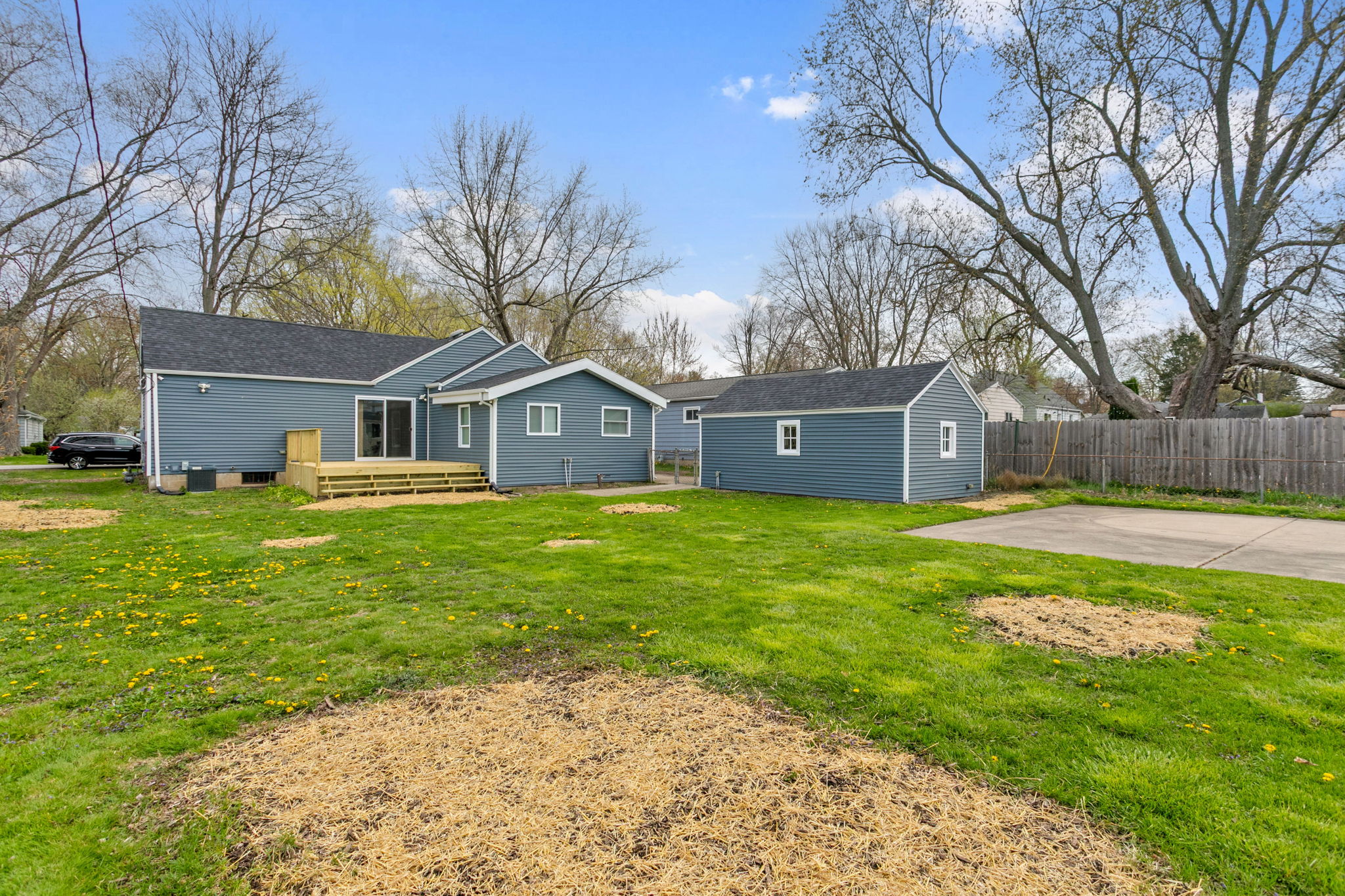
South Bend's real estate market has been one of the most closely watched small-city markets in the Midwest over the past five years. Located two hours east of Chicago and home to the University of Notre Dame, St. Joseph County has seen the kind of appreciation that caught national attention — median prices roughly doubling between 2019 and 2024 — while still remaining far more affordable than comparable markets. In 2026, the market is settling into a new equilibrium. Here's what the data shows, what it means for sellers, and what the local conditions specific to St. Joseph County tell us about the year ahead.
One development worth watching for anyone tracking St. Joseph County values: the $11 billion AWS data center campus at the Indiana Enterprise Center southeast of New Carlisle, brought online in late 2025, is the largest capital investment in Indiana history and has pulled sustained outside interest into the western half of the county.
South Bend remains a seller's market in most price ranges, but days-on-market have extended compared to 2022–2023 peaks. Properly priced homes in good condition sell. Homes needing work or overpriced homes sit. The median sale price for existing homes in South Bend/St. Joseph County currently runs $175,000–$230,000 for a typical 3-bedroom — a figure that's stabilized after the post-pandemic run-up.
South Bend Housing Market by the Numbers
Understanding the local market means looking at St. Joseph County data specifically — not statewide Indiana figures, which blur the picture by averaging South Bend's affordable market with Indianapolis's different dynamics. Key indicators for South Bend/Michiana as of early 2026:
- Median sale price (St. Joseph County, existing homes): Approximately $185,000–$210,000 depending on the quarter and data source
- Days on market (median, MLS listings): 28–45 days — up from the 8–14 day peaks of 2022
- List-to-sale price ratio: Approximately 97–99% — sellers are getting close to asking price on well-priced homes
- Inventory: Improving from historic lows but still below pre-2020 norms
- Foreclosure activity: Ticking up modestly in St. Joseph County from historic lows — the end of pandemic-era forbearance programs is a contributing factor
These are macro figures. Your specific property and neighborhood may be meaningfully different. The St. Joseph County Assessor's comparable sales database at assessor.stjosephcountyin.gov shows actual recent sales — search your address or neighborhood to see real transaction data, not estimates.
South Bend Neighborhood Market Conditions
South Bend's real estate market is highly neighborhood-dependent. The same general market trend masks dramatically different conditions across different parts of the city and county.
Strong Demand Neighborhoods (2025–2026)
Granger/Unincorporated North St. Joseph County: Consistently the strongest price tier in the county. PHM school district pull, larger lots, newer construction. The Census Bureau's 2020–2024 American Community Survey puts the median owner-occupied home value in Granger at $331,100, against $192,800 for St. Joseph County (table B25077). Days on market shorter than city averages.
Near Northwest Side (South Bend): Historic neighborhood northwest of downtown experiencing sustained gentrification interest. (Rum Village, often mentioned in the same breath, is a separate neighborhood on the city's south side, around Rum Village Park off Ewing Avenue.) Victorian and Craftsman homes attracting renovation-focused buyers at prices unthinkable a decade ago. Appreciation has been strong.
Mishawaka (overall): The "Princess City" benefits from its reputation as South Bend's more polished neighbor. Strong demand, good school scores, and a walkable downtown drive consistent buyer interest. If your Mishawaka home needs work and won't draw those buyers, we buy houses in Mishawaka as-is for cash.
Value/Transition Neighborhoods
South Bend East Side: Improving but still price-sensitive. Traditional buyers more cautious — properties in C condition often sit. Cash buyers most active here.
South Bend West Side: A tale of sub-neighborhoods. Some blocks near the river are appreciating; others remain challenged. Know your specific street's comps, not the general area average.
Near Southeast / Sample-Vance: Active investment activity but traditional buyers remain scarce. Most sales in this area go to cash buyers.
What Moves Fast vs. What Sits
The clearest pattern in South Bend's 2025–2026 market: condition and price point are everything. The sorting is more extreme than it was in the frenzy years when everything sold.
| Property Type | Market Behavior | Typical Timeline |
|---|---|---|
| Updated 3/2 in Mishawaka or Granger, priced right | Multiple offers, above ask | Under 2 weeks |
| Clean, move-in ready in any neighborhood, priced to market | Steady buyer traffic, single offer | 2–5 weeks |
| Cosmetically dated but sound, priced to reflect | Slower — needs right buyer | 4–10 weeks |
| Needs significant repairs, priced at retail | Minimal traffic, no offers | Sits 90+ days |
| Estate/probate homes, deferred maintenance | Best suited for cash buyers | Dependent on condition |
| Properties with code violations or title issues | Traditional buyers can't/won't close | Cash buyer only |
The Notre Dame Effect on South Bend Real Estate
The University of Notre Dame's presence is one of the most significant structural factors in South Bend's real estate market — and often underestimated by sellers and buyers who aren't familiar with how university markets work.
Notre Dame directly employs approximately 6,000 people. The broader university ecosystem — affiliated hospitals (Saint Joseph Health System, IU Health Goshen), research partnerships, and the economic multiplier of 12,000+ students — creates a stable employment base that insulates the South Bend market from the full force of regional economic cycles that affect purely manufacturing-dependent communities like Elkhart.
The 46556 ZIP code surrounding Notre Dame and the near-north side of South Bend has seen disproportionate investment in the past decade. Faculty, staff, and visiting researchers drive rental demand and homebuying in a wide radius around the campus. Properties within a reasonable commute of Notre Dame have a structurally stronger floor than similar properties in cities without a major institutional anchor.
The flip side: the Notre Dame effect doesn't extend uniformly across South Bend. The university's campus is on the north side; the south and east sides of the city are further from this gravitational pull.
How Interest Rates Affect South Bend Sellers in 2026
Mortgage rates have remained elevated through the Federal Reserve's tightening cycle, and while they've pulled back somewhat from 2023 peaks, they remain high enough to significantly affect affordability for first-time buyers in South Bend.
For sellers, this means two things. First, the pool of qualified traditional buyers is smaller than it was in 2021 when 3% mortgages made even modest incomes stretch to higher price points. Second, buyers who are in the market are more price-sensitive — they're looking at monthly payments, not just sticker price.
For properties in the $150,000–$200,000 range — South Bend's sweet spot — a 7% mortgage on a $180,000 home with 10% down runs approximately $1,200/month PITI. That's manageable for a dual-income household in Michiana, but it's tight for single earners. The market is still functioning; it's just more selective than it was.
Cash buyers — like South Bend Fair Offer — are completely unaffected by mortgage rates. We don't use financing. This is why cash sales have grown as a percentage of all transactions as rates have risen: sellers who need certainty or speed can't rely on a financed buyer's ability to close.
When Is the Best Time to Sell in South Bend?
South Bend's traditional listing market has clear seasonal patterns:
- March–June (Peak): Most buyer activity, most listings, fastest sales, typically highest prices. University-related buyers often time purchases for summer transitions.
- July–August (Active): Still busy but starting to slow from spring peak. Good time to list.
- September–October (Moderate): Less competition from other listings; serious buyers still active. Good results possible.
- November–February (Slow): Fewer showings, longer days on market. Buyers in this period are often highly motivated — job relocations, financial necessity — but there are fewer of them.
If you're selling to a cash buyer, season doesn't matter. We buy year-round and our offer math doesn't change in January vs. June. For sellers with hard timelines — foreclosure, estate deadlines, job relocations — a cash sale provides the same outcome regardless of the calendar.
South Bend Market Research Resources
- St. Joseph County Assessor (stjosephcountyin.gov/assessor) — actual recorded sale prices for all St. Joseph County properties. More accurate than Zillow for local comps.
- Indiana Gateway (gateway.ifionline.org) — state-level data on assessed values, tax rates, and property trends by county.
- South Bend Tribune Real Estate Section (southbendtribune.com) — local market coverage and quarterly market reports.
- St. Joseph County Association of Realtors — publishes quarterly market data for local professionals.
- mycase.in.gov — track foreclosure activity in St. Joseph County, which affects market supply in certain price ranges.
What's Your South Bend Home Worth in Today's Market?
We look at the same comps your agent would — actual St. Joseph County sales data — plus the condition of your specific property. Call us for a no-obligation evaluation.
Frequently Asked Questions
What is the median home price in South Bend, IN?
As of early 2026, the median sale price for existing single-family homes in South Bend/St. Joseph County runs approximately $185,000–$210,000 for a typical 3-bedroom home, depending on the data source and time period. This varies significantly by neighborhood — Granger runs much higher, parts of the east and west sides run lower. Check actual comparable sales at the St. Joseph County Assessor's website for the most accurate neighborhood-level data.
Is now a good time to sell a house in South Bend?
In most price ranges, yes — South Bend remains a seller's market with limited inventory relative to demand. Move-in-ready homes priced correctly still sell within a few weeks. The calculus changes for properties needing significant work: traditional buyers are more selective than they were in 2021–2022, and homes that need major repairs often sit. If you have a property in distress or needing work, a cash sale may produce a better outcome than waiting for a traditional buyer who may not exist.
How does Notre Dame affect South Bend home prices?
Significantly. Notre Dame employs ~6,000 people directly and anchors an institutional economy that includes affiliated hospitals, research partnerships, and service industries. This creates sustained demand for housing within commuting distance of campus — particularly on the north side of the city — that provides a floor under prices that purely manufacturing-dependent Michiana cities (like Elkhart) don't have.
How long does it take to sell a house in South Bend in 2026?
For move-in-ready, properly priced homes: 2–5 weeks from listing to accepted offer, then 30–45 days to close — so 6–12 weeks total. For homes needing work or overpriced homes: significantly longer, sometimes 90+ days with price reductions. For cash sales to South Bend Fair Offer: 7–14 days from offer acceptance to close.