
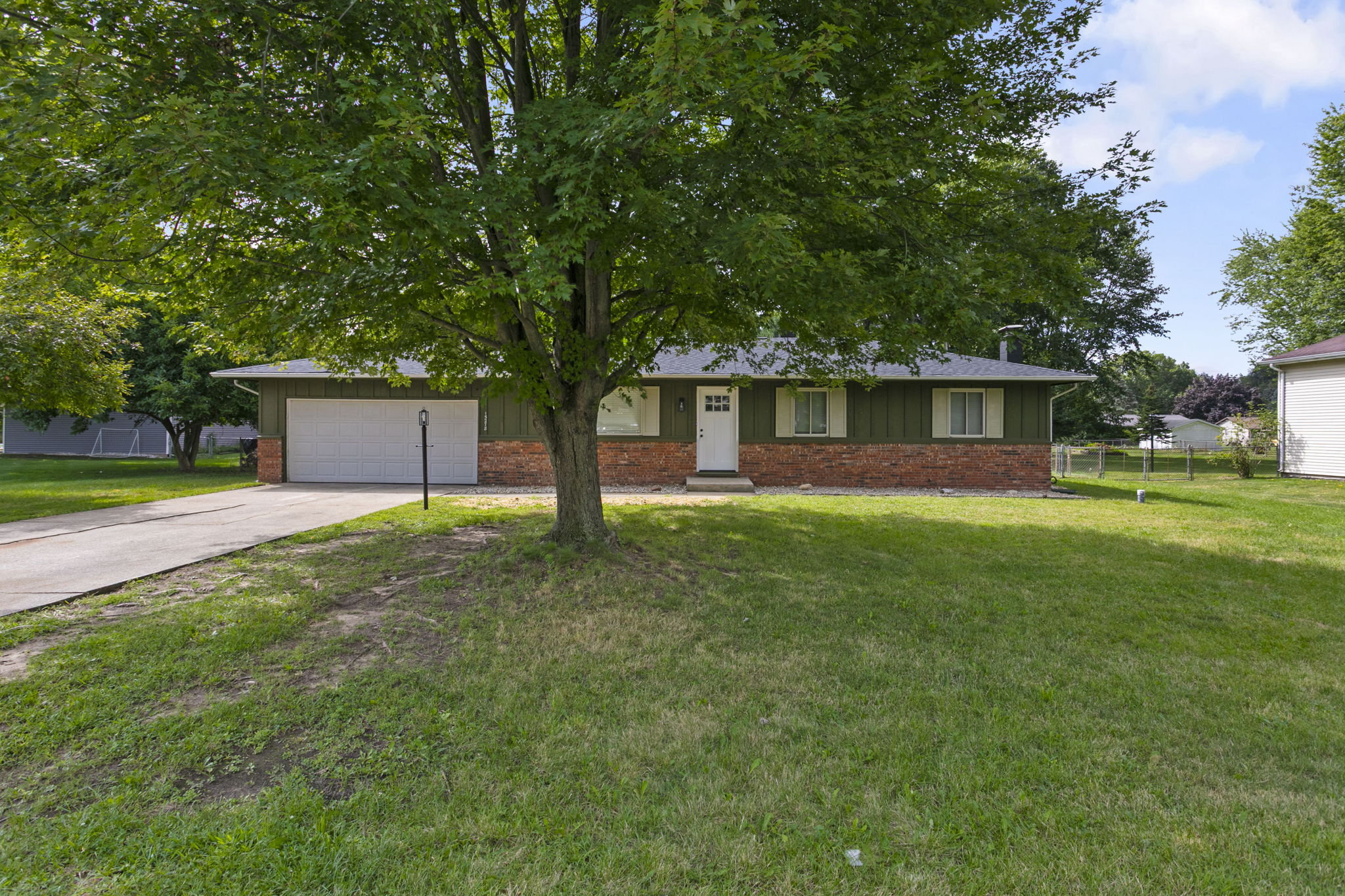
Selling an inherited home in South Bend is rarely just a real estate transaction. It's the intersection of grief, family dynamics, Indiana probate law, tax implications, and the practical problem of a property that may be sitting empty, accumulating costs, and creating pressure from every direction. This guide walks through the entire process — from determining whether you even need to go through probate, to the tax advantages most heirs don't know about, to how to handle a house with five siblings and two differing opinions.
Not every inherited property requires full probate in St. Joseph County Superior Court. TOD deeds, joint tenancy with right of survivorship, and small estate procedures can transfer title without court involvement. Determine which path applies before doing anything else — it changes your timeline dramatically.
Does the Inherited South Bend Home Need to Go Through Probate?
Indiana Code Title 29 governs probate. The answer depends on how the decedent held title to the property:
Cases Where Probate Is NOT Required
- Joint Tenancy with Right of Survivorship (JTWROS): If the home was owned as "joint tenants with right of survivorship," the surviving owner takes full title automatically at death. Record an Affidavit of Survivorship with the St. Joseph County Recorder (574-235-9722), attach a certified death certificate, and you can sell.
- Transfer-on-Death Deed (IC § 32-17-14): If the decedent recorded a TOD deed naming you as beneficiary, title transfers automatically. Record an Affidavit of Transfer on Death with the Recorder and you're done. No court involvement.
- Living Trust: Property held in a living trust transfers to the beneficiary per the trust terms, outside probate. The successor trustee has authority to sell.
- Small Estate Affidavit (IC § 29-1-8-1): If the total gross probate estate is $100,000 or less for a death after June 30, 2022 (including the real property), heirs may be able to use a Small Estate Affidavit in some circumstances. Consult an attorney — this has limitations for real property.
When Full Probate in St. Joseph County Is Required
If none of the above applies — the property was held in the decedent's name alone, without a TOD deed or survivorship arrangement — you'll need to open a formal probate estate in the St. Joseph Probate Court, 1000 S. Michigan St., South Bend, IN 46601, (574) 235-5378. If your parent lived in Goshen or elsewhere in Elkhart County, the estate is opened there instead, at the Elkhart County Judicial Complex, 1905 Reliance Road in Goshen; our sell my house fast in Goshen page lists the county offices you will deal with there.
How Probate Works in St. Joseph County
Indiana probate (IC § 29-1) involves these steps. Timeline: typically 5–12 months in St. Joseph County for a standard estate.
- 1. File petition to open probate with the court (filing fee: ~$160–$220). Attach the original will and certified death certificate. The court appoints an executor (if will names one) or administrator (if no will or named executor can't serve).
- 2. Creditor notice period: The estate must publish notice in a local newspaper and provide direct notice to known creditors. Creditors have 3 months to file claims (IC § 29-1-14-1). This period is the floor on how fast probate can close.
- 3. Property inventory and appraisal: The executor files an inventory of all estate assets, including an appraisal of real property.
- 4. Pay debts: Valid creditor claims, final taxes, and estate expenses are paid from estate assets.
- 5. Court approval to sell: The executor typically needs court approval to sell real property unless the will grants full authority to sell without court approval. The court may require notice to heirs.
- 6. Close estate and distribute: After all debts paid and assets distributed, file a final accounting with the court and petition to close.
South Bend Fair Offer regularly purchases properties during the probate process — once the executor is appointed and has authority to sell. Proceeds go into the estate for distribution after the court approves. We work with estate attorneys throughout St. Joseph County and understand the process.
The Stepped-Up Basis: The Tax Advantage Most Heirs Miss
This is the most financially important concept for anyone selling an inherited South Bend home, and it's consistently misunderstood:
Under IRC § 1014, your tax basis in inherited property is "stepped up" to the fair market value at the date of the decedent's death — regardless of what the original owner paid for it.
What this means practically: If your parent bought a South Bend home in 1985 for $55,000, and it was worth $185,000 when they died, your cost basis is $185,000. If you sell it for $185,000 within a few months of inheriting, your capital gain is essentially zero — you owe little or no federal capital gains tax on the sale.
Hold it for three years and sell for $210,000? You owe capital gains tax only on the $25,000 of appreciation after the date of death — not on the full $155,000 of appreciation during the deceased's lifetime. The step-up effectively eliminates the embedded gain on decades of appreciation.
This makes selling relatively soon after inheriting — while the stepped-up basis is fresh and the gain is minimal — often the most tax-efficient choice. The longer you hold, the more post-death appreciation accumulates as taxable gain. Confirm with a CPA for your specific situation — this is general information, not tax advice.
The Multiple-Heir Problem: When the Family Doesn't Agree
This is the most common complication we see: four heirs with four different opinions. Sibling A wants to sell immediately and split the cash. Sibling B thinks the house should be rented and held as family investment property. Sibling C is still processing the loss and isn't ready to make any decision. Sibling D lives in the house and claims it should be theirs.
The legal reality: all heirs with an ownership interest must consent to a voluntary sale. If consensus can't be reached, the legal mechanism is a partition action under IC § 32-17-4 — any co-owner can petition the court to order the property sold and proceeds divided. Partition suits are slow (6–18 months), expensive ($5,000–$20,000+ in legal fees), and damage family relationships in ways that outlast the lawsuit.
South Bend Fair Offer has worked through dozens of multi-heir situations. Some structures that have worked:
- One heir buys out the others using the cash sale proceeds — we fund it at our offer price
- All heirs sign separately with the title company coordinating remote signings across different states
- Estate proceeds held in escrow while an heir dispute resolves — we close our side, they settle their side
- Structured timeline that gives resistant heirs defined decision windows
The Real Cost of Holding an Inherited South Bend Home
Every month the property sits unsold costs money. For a modest South Bend inherited home, monthly carrying costs typically include:
- Property taxes: $150–$300/month (based on $2,000–$3,600/year for typical assessed values)
- Homeowner's insurance (vacant home policy): $80–$130/month
- Utilities (minimum to prevent freeze damage in Indiana winters): $100–$200/month
- Lawn maintenance and South Bend code compliance: $50–$150/month
- Ongoing maintenance (deferred problems become bigger problems): variable
Holding an inherited South Bend home for 6 months while debating what to do can easily cost $3,000–$6,000 — money that comes out of the eventual sale proceeds. The stepped-up basis advantage also erodes with every month the property appreciates post-death.
Local Resources for Inherited Property in South Bend
- St. Joseph County Probate Court: 1000 S. Michigan St., South Bend | (574) 235-5378 | Forms, filing fees, procedural guidance
- St. Joseph County Recorder — TOD Deed & JTWROS Records: (574) 235-9722 | 227 W. Jefferson Blvd. | Verify current deed type
- Indiana Legal Services — South Bend: (574) 234-8121 | 524 Franklin St. | Free legal help for qualifying heirs
- Indiana State Bar — Attorney Referrals: inbar.org | 1-800-266-2581 | Find a South Bend probate attorney
- St. Joseph County Assessor — Property Records: assessor.stjosephcountyin.gov | (574) 235-9523 | Confirm current ownership, look up comparable sales
Inherited a South Bend Home? We Know the Process.
We buy in any probate stage — mid-process, multi-heir, as-is, with or without a mortgage. Call us for a no-pressure evaluation.
Frequently Asked Questions
Do I have to go through probate to sell an inherited home in Indiana?
Not always. TOD deeds, joint tenancy with right of survivorship, and living trusts all transfer property outside probate. Full probate in St. Joseph County Superior Court is required when property was held in the decedent's name alone without these arrangements. Check the current deed at the St. Joseph County Recorder (574-235-9722) to determine what applies.
How long does it take to sell an inherited South Bend home?
Depends on whether probate is required. Without probate (TOD deed, JTWROS): you can sell as soon as you record the appropriate affidavit — potentially within a few weeks of death. With probate: 5–12 months for the probate process before the estate can close, though a sale can be initiated once the executor is appointed. Cash buyers can close quickly once legal authority to sell is established.
What is the stepped-up basis and how does it apply to an inherited South Bend home?
Under IRC § 1014, your tax basis in inherited property is the fair market value at the date of death — not what the original owner paid. If a South Bend home appreciated from $55,000 to $185,000 during the deceased's lifetime, that $130,000 gain is not taxed when you sell. Only appreciation after the date of death creates taxable gain.
What if one heir wants to sell and another doesn't?
All heirs must consent to a voluntary sale. If consensus fails, any co-owner can file a partition action under IC § 32-17-4, asking the court to order a sale. Partition suits are expensive and slow. Most situations are better resolved through negotiation — we've worked with families in this situation many times and can suggest structures that have worked for others.