
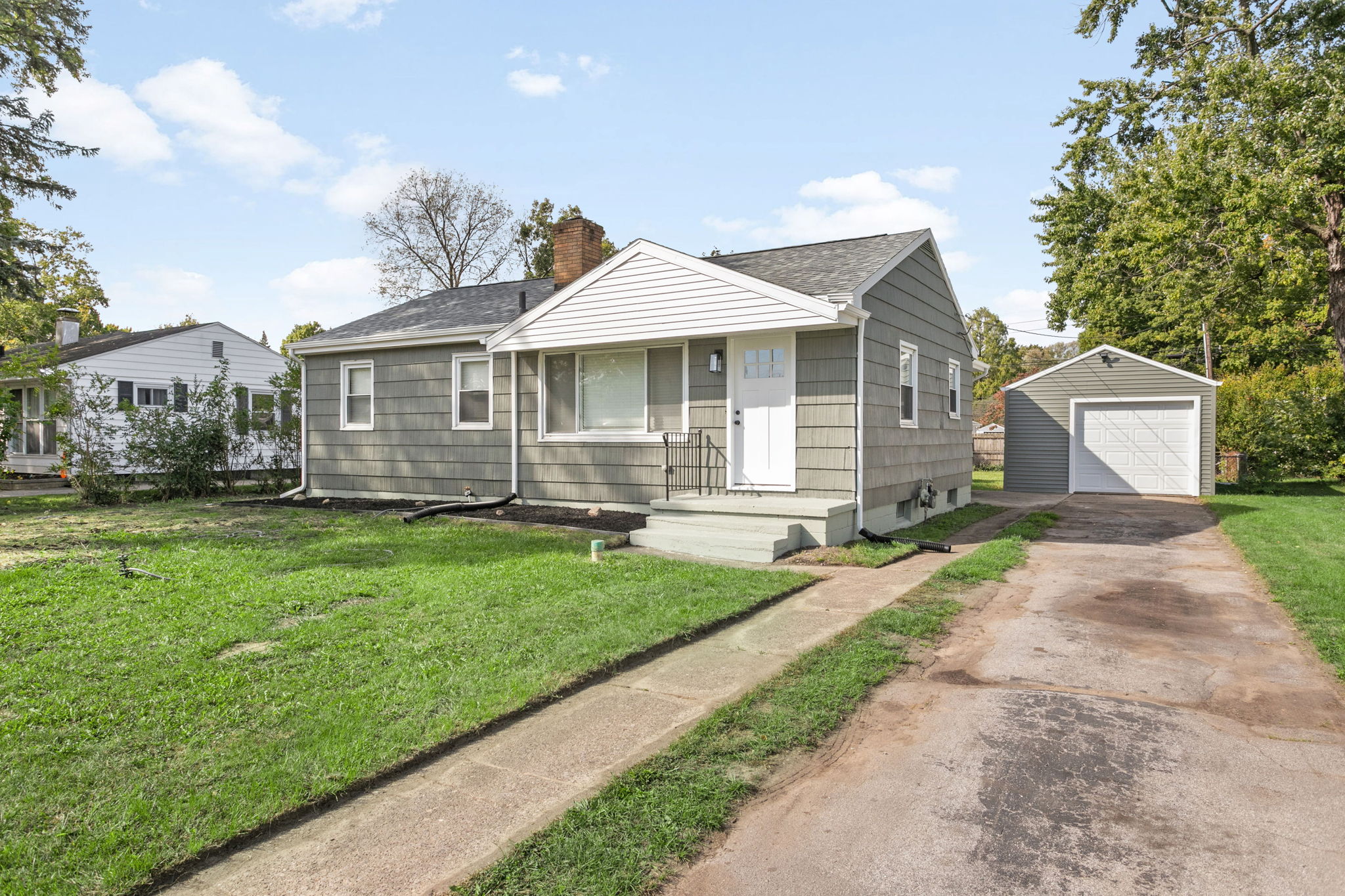
It usually starts with a fall, a hospital stay or a diagnosis. A parent who has lived in the same South Bend house for forty years goes into rehab, then into assisted living or a nursing home, and it becomes clear they won’t be moving back. The house is sitting empty on the south side or in Mishawaka, the bills are still coming, the care facility wants to know how the next month will be paid, and one of the adult children, often the one who lives closest, ends up handling all of it.
This guide is for that person. It covers who has the legal authority to sell a parent’s house in Indiana, what a power of attorney has to look like before a title company will accept it, what happens when there isn’t one, how the house is treated by Indiana Medicaid, and why keeping the house isn’t automatically the safe choice. It is general information, not legal or benefits advice. Medicaid planning is a field where one wrong move is expensive, so check your family’s situation with an Indiana elder law attorney before you sign anything.
You can only sell a parent’s house if your parent signs or someone has legal authority to sign for them: a recorded power of attorney, or a guardian appointed by the court. While your parent intends to return home, Indiana Medicaid generally doesn’t count the house. Once it’s sold, the money is counted. Sell for fair value, keep every receipt, and talk to an elder law attorney before the listing or the purchase agreement. Don’t leave it until the closing.
Who Can Sign for Mom or Dad?
The first question isn’t price. It’s authority. A house belongs to the person on the deed, and being their child, their caregiver or the executor named in their will gives you no power to sell it while they are alive. A will only takes effect at death. There are three realistic ways a sale can go ahead:
- Your parent signs. If they still have the mental capacity to understand the sale, they can sign the purchase agreement and deed themselves. A mobile notary can usually come to the care facility for the signing.
- An agent signs under a power of attorney. This is the most common route, and the cleanest one when the document was drafted well.
- A court-appointed guardian signs. This is the route when your parent can no longer make decisions and never signed a power of attorney.
If the house is titled jointly, for example with a surviving spouse, every owner has to sign or be represented. If your parent has already passed away, you’re in probate territory instead, and our guide to selling an inherited house in South Bend covers that process.
Selling Under a Power of Attorney
Indiana’s power of attorney law is in Indiana Code Title 30, Article 5. Two parts of it matter most for a house sale.
The document has to cover real estate
A power of attorney only grants the powers it lists. IC 30-5-5-2 defines what “general authority with respect to real property transactions” means, and that is the language a title company looks for. A document limited to banking, or to health care decisions, won’t let you sell the house. Find the original document, read it, and send a copy to the title company early. Surprises here can delay a closing by weeks.
It has to be recorded before the deed
This is the step families most often miss. Under IC 30-5-3-3, an agent who signs a document that must be recorded, which a deed is, has to record the power of attorney itself first. The county recorder may not accept a deed signed by an agent whose power of attorney is unrecorded, and the deed has to reference the book and page or instrument number where the power of attorney was recorded. In St. Joseph County that means the County Recorder’s office. A good title company handles this for you, but it needs the original document, or a copy that meets recording rules, to do it.
An agent under a power of attorney has to act in the parent’s interest, not their own. Selling the house cheaply to yourself or a sibling, or moving the proceeds into your own account, creates legal exposure for you and, as explained below, can cause serious Medicaid problems for your parent. Keep the sale at arm’s length, get it priced fairly, and send the proceeds to an account in your parent’s name.
When There’s No Power of Attorney
If your parent no longer has capacity and never signed a power of attorney, nobody can sell the house until a court appoints a guardian. Indiana guardianships are governed by IC 29-3, and in this county the case is heard by the St. Joseph Probate Court, a standalone probate court established by statute (IC 33-31-1-1). Elkhart County families go through their own county’s courts.
A guardianship takes longer and costs more than a power of attorney. It means a petition, notice to family, a hearing and usually medical evidence, and the guardian then answers to the court, including accounting for the parent’s money. Ask the guardianship attorney what the court will need before the house can be sold, and build that into your timeline before you agree to a closing date with any buyer. If your parent still has capacity today, the cheapest fix is simple: have them sign a durable power of attorney with real estate powers now, while they still can.
The House and Indiana Medicaid
Most families reach this point because of cost. Long-term nursing care is expensive, and many South Bend seniors will rely on Indiana Medicaid to pay for it eventually. The house sits right in the middle of that.
While your parent intends to return
Indiana Medicaid has a very low resource limit. The state’s eligibility policy manual lists $2,000 for an individual. A home is generally exempt from that count when it is the principal residence of the applicant, their spouse or certain dependent children. Under the Indiana Family and Social Services Administration (FSSA) manual, it stays exempt until it’s verified that none of those people intends to live there or is physically able to. When a stated intent to return conflicts with the person’s apparent physical ability to do so, the caseworker gets documentation from the doctor.
After the house is sold
Once the house becomes cash, that cash is a countable resource. In practice the proceeds usually pay for care privately until the balance comes down to the limit, and then the parent qualifies or requalifies. The manual allows a narrow exception when the proceeds of an exempt home are used to buy a replacement home within a short window, but that rarely fits a parent moving into nursing care. When a house is no longer exempt, FSSA can also require the owner to agree to offer it for sale or rent as a condition of eligibility, so an empty house can end up on the market either way.
The look-back and giving the house away
Medicaid reviews transfers made during a five-year look-back period. Giving the house to a child, or selling it to one for well under what it’s worth, can be treated as a gift and trigger a period of ineligibility. Federal law has a few narrow exceptions, including one for a child who lived in the home and provided care that kept the parent out of a facility, but whether one applies depends on specific facts and documentation. This is the single most important question to take to an elder law attorney before the house changes hands. A documented, fair-market sale to an unrelated buyer is the plain case. Keep the purchase agreement, the closing statement and a record of how the price was set.
Keep It or Sell It? Estate Recovery
Some families hold on to the house because it doesn’t count for Medicaid. That can make sense, but it isn’t free, and it doesn’t make the house safe.
Indiana runs a Medicaid Estate Recovery Program. According to FSSA, after a recipient dies the state seeks to recover what Medicaid paid for their care after age 55, and a recipient’s house and real estate may be subject to that claim. That includes a house passed to someone through joint tenancy with right of survivorship if the joint tenancy was created after June 30, 2002. Beginning July 1, 2025, the state has nine months after the date of death to file its claim, but that limit doesn’t apply to assets that weren’t reported to FSSA’s Division of Family Resources, such as property passed by a transfer on death deed. There are protections. The state doesn’t recover while the recipient is survived by a spouse, a child under 21, or a blind or disabled child, and heirs can apply for an undue hardship waiver within 90 days of the claim.
Meanwhile, the empty house keeps costing money. Property taxes, utilities, lawn care and snow removal, a standard homeowners policy that may not fully cover a vacant house, and the break-ins and frozen pipes that empty houses attract all add up. Our guide to selling a vacant house in South Bend covers those carrying costs in detail. Holding the house can still be the right call, but decide on the numbers. Don’t hold it just because selling feels like giving up.
Handling a Parent’s House From a Distance?
We can walk the house with you or without you, give you a written as-is offer to take to your siblings and your attorney, and close on a date that works around the care facility and the paperwork. You are never obligated to accept.
Disclosure When You Didn’t Live There
Indiana’s residential sales disclosure law, IC 32-21-5, requires the owner of a one-to-four-unit home to complete the disclosure form and give it to a prospective buyer before an offer is accepted. Who fills it out depends on the route:
- Sale under a power of attorney: your parent is still the seller, and a sale by an agent isn’t among the exemptions in IC 32-21-5-1, so plan on completing the form. Answer from what your parent and the family actually know. If you simply don’t know the age of the furnace, say so rather than guessing.
- Sale by a guardian: transfers by a fiduciary in the course of administering a guardianship are exempt under the same section, as are sales by the personal representative of an estate.
Either way, a buyer is going to walk the house. Houses that have been lived in by one elderly owner for decades often need a roof, a furnace, updated electrical and a lot of clearing out. Our as-is selling guide explains how condition turns into a price, so you can judge whether a repair is worth doing before a sale.
Four Choices for the Family Home
| Choice | What the Family Does | Fits When | What It Costs |
|---|---|---|---|
| 1. Keep the house | Hold it, empty or with a relative living there, while your parent is in care. | A spouse still lives there, return is realistic, or an attorney has a specific plan for it. | Monthly carrying costs, vacancy risk, and possible estate recovery later. |
| 2. Rent it out | Lease it and use the rent toward care. | The house is in rentable shape and someone local can manage it. | Rent income can affect Medicaid eligibility, and managing tenants from a distance is hard. Our landlord guide covers the downsides. |
| 3. List with an agent | Clear it out, fix what’s needed, and sell on the open market. | The house is in good condition and there’s time and money for prep and showings. | Commissions, repairs, clean-out, and months of carrying costs while it’s listed. |
| 4. Sell as-is for cash | A single written price with the furniture and keepsakes you do not want left behind, and closing timed to the POA or guardianship paperwork. | Repairs are needed, siblings live elsewhere, or the care facility’s bills are arriving now. | The price is below a fully repaired value. Compare what you’d net, not the list price. |
The honest comparison is what your parent would net from each route after repairs, commissions, clean-out and months of carrying costs, and how much of that time the family can realistically give. Our cash buyer vs. realtor breakdown works through that math. For a real example, see how one family handled a senior living transition in South Bend. The owner was already in assisted living, and we coordinated the move of their personal items before buying the house as-is. There is more on this kind of move on our downsizing and senior transitions page.
We have bought parents’ homes all over St. Joseph County (South Bend, Mishawaka, Granger) and in Elkhart County. See our how it works page for what happens after the first call.
People to Call First
- An Indiana elder law attorney: Medicaid timing, the five-year look-back, any transfer to family, and whether keeping the house makes sense
- A title company: review the power of attorney or guardianship order and record the power of attorney before closing, as IC 30-5-3-3 requires
- St. Joseph County Recorder: where the power of attorney and the deed are recorded
- St. Joseph Probate Court: guardianship petitions when there’s no power of attorney
- FSSA Division of Family Resources: your parent’s Medicaid caseworker, who needs to know about a sale
- Indiana Medicaid Estate Recovery — 877-267-0013: questions about a claim or the undue hardship waiver
- St. Joseph County Treasurer — (574) 235-9531: any tax installments still owed on Mom or Dad’s parcel
Broader selling questions are answered on our South Bend FAQ page.
Frequently Asked Questions
Can I sell my parent’s house in Indiana with a power of attorney?
Yes, if the document grants authority over real property transactions. That’s the language defined in Indiana Code § 30-5-5-2. A power of attorney limited to banking or health care decisions won’t cover a sale. Under IC 30-5-3-3, the power of attorney must be recorded with the county recorder before a deed you sign as agent can be recorded, and the deed has to reference where it was recorded. The title company normally handles that, but it needs the document well before closing.
What if my parent can’t sign and there’s no power of attorney?
Then nobody can sell the house until a court appoints a guardian. Indiana guardianships are handled under IC 29-3, and in St. Joseph County the case goes to the St. Joseph Probate Court. Expect a petition, notice to family, a hearing and medical evidence, and ask the attorney what the court will require before a sale. If your parent still has capacity, having them sign a durable power of attorney with real estate powers is far simpler.
Does selling the house affect my parent’s Medicaid in Indiana?
It can. While your parent intends to return home, the house is generally exempt from Indiana Medicaid’s resource limit, which the state’s manual lists as $2,000 for an individual. Once the house is sold, the proceeds are a countable resource and typically pay for care until the balance is back under the limit. Selling to a family member for less than fair value can be treated as a gift under the five-year look-back and delay eligibility. Talk to an elder law attorney before the sale.
Will the state take the house after my parent dies if we keep it?
It may make a claim. Indiana’s Medicaid Estate Recovery Program seeks to recover what Medicaid paid for care after age 55, and FSSA says a recipient’s house may be subject to that claim, including a house passed through joint tenancy created after June 30, 2002. The state doesn’t recover while the recipient is survived by a spouse, a child under 21, or a blind or disabled child, and heirs can apply for an undue hardship waiver within 90 days of the claim.
Selling a Parent’s House Without the Runaround
Whether your parent is in rehab, assisted living or long-term care, and whether you’re working under a power of attorney or waiting on a guardianship, we will put a cash price for your parent’s house in writing, as it sits and with no obligation. We coordinate with the elder law attorney and the title company, set the closing around the paperwork, and handle the clear-out ourselves. Call (574) 498-3434 or tell us about the house online.