
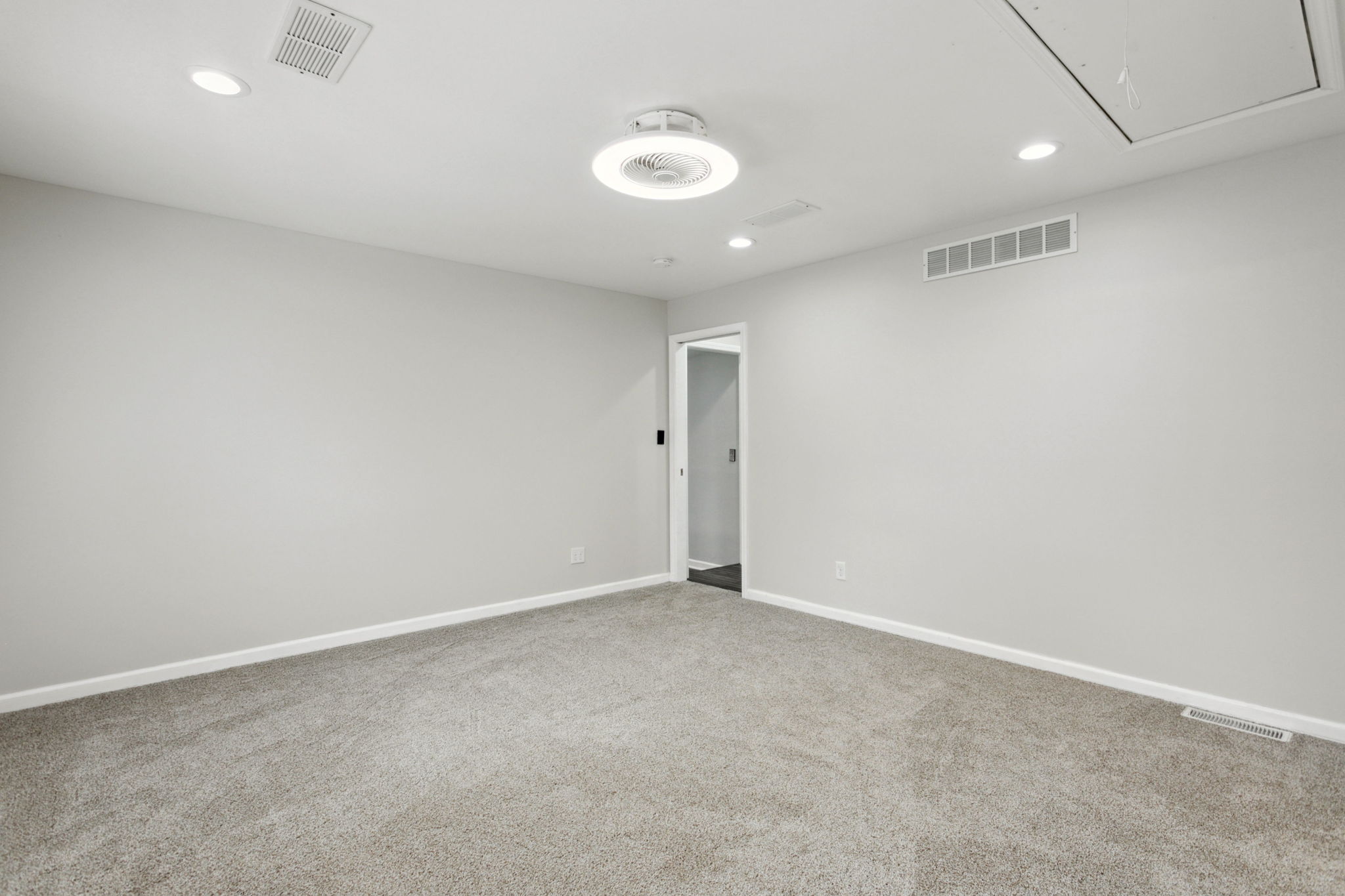
Almost nobody plans to own an empty house. It happens to you. A parent passes away and the house in River Park sits while the estate works itself out. A job moves you to Indianapolis in six weeks and the place on the northwest side does not sell before you go. A tenant leaves, the unit needs more work than you expected, and one month of vacancy quietly becomes eight. However it started, the house is now costing you money every single month while producing nothing.
What makes a vacant house different from a house you live in is that the risks compound quietly. There is nobody there to notice the water heater letting go, nobody to shovel the walk before a code complaint, and — the part that surprises most owners — there may no longer be an insurance policy that would actually pay if something went wrong. This guide covers what an empty house in South Bend really costs, the two rules most owners find out about too late, and the four ways out. Treat it as a general overview, not legal, tax or insurance advice. Your own policy wording and your own parcel record are what count, so check both.
Before anything else, call your insurance agent and ask a single question: “How many days of vacancy does my policy allow before coverage is suspended, and have we already passed it?” Most standard homeowners policies suspend major coverages somewhere in the 30-to-60-day range. An uninsured empty house is the one problem on this page that can wipe out the entire asset overnight.
What an Empty House Actually Costs You Every Month
Owners tend to think of a vacant house as costing nothing, because nobody is running the dishwasher. The carrying costs do not care whether anyone lives there. Before you decide to keep waiting, it is worth sitting down and adding up what the house takes out of your account every month. Most of it is fixed:
- Mortgage principal and interest, if there is still a loan on it. This does not pause for vacancy.
- Property taxes. The bill still comes twice a year in Indiana, with installments due May 10 and November 10, whether or not anyone lives there. A late installment draws a 5% penalty if you catch up inside 30 days and nothing else is owed on the parcel, and 10% in any other case.
- Insurance — and, as the next section explains, quite possibly a higher premium than you were paying when someone lived there.
- Utilities you cannot actually shut off. You need heat through a Michiana winter and you generally want power for a sump pump. This is the bill people assume disappears and it does not.
- Lawn, snow and basic upkeep, which for an out-of-town owner means paying someone.
- Drive-by checks, whether that is your own time or a friend’s.
Total those, multiply by the number of months you realistically expect this to take, and you have the real number to weigh any offer against. We are not going to print a dollar figure here, because yours depends on your loan balance, your assessed value and your insurer — but almost every owner who does this arithmetic is surprised by the annual total.
There is a second, quieter cost. A house deteriorates faster empty than occupied, because nobody catches the small thing before it becomes the big thing. A supply line drips behind a wall for four months instead of four hours. That is how a house that needed cosmetic work in March needs a subfloor and drywall by October, and it is a large part of why a vacant property’s value tends to drift downward the longer the decision waits. Our guide to selling as-is in South Bend covers how condition actually shows up in an offer.
The Insurance Problem Most Owners Find Out About Too Late
This is the single most important thing on this page, and it catches people who have done everything else right.
Standard homeowners policies contain a vacancy clause. Once the home has been empty beyond a defined period — commonly somewhere in the 30-to-60-day range, though the exact threshold varies by carrier and policy form — the policy suspends major coverages. Vandalism and malicious mischief are typically the first to go, along with theft, glass breakage and certain water damage. Some insurers will also decline to renew the policy once they learn the property is unoccupied.
Read that again in practical terms: the house most likely to be broken into, stripped for copper, or damaged by a burst pipe is precisely the house whose policy has stopped covering those things. Owners routinely discover this at the worst possible moment, standing in a flooded basement with a claim adjuster explaining the vacancy provision.
What to do about it:
- Call your agent before the threshold, not after. Ask for your specific number of days in writing and whether the clock has already run.
- Ask about a vacant home endorsement added to your existing policy, or a standalone vacant property policy from a specialty carrier. Either one costs more than what you pay now.
- Do not simply stop telling your insurer. A non-disclosed vacancy is how a claim gets denied outright.
The distinction between “unoccupied” and “vacant” matters to insurers, too: a furnished house nobody is sleeping in is usually treated differently from an empty one with the personal property removed. Your declarations page governs, not a general rule from an article — including this one.
When the City of South Bend Requires You to Register a Vacant Property
South Bend has dealt with vacant housing seriously for years, and there is a registration requirement attached to it. The trigger is two conditions together, which is the part owners misread. Per the City’s own guidance, a property must be registered with Neighborhood Services & Enforcement when no one has lived in it for at least 90 days and it also has a housing-related code violation that has gone unaddressed for more than 30 days. See the City’s vacant and abandoned property guidance for the current language.
So an empty, well-maintained house is not automatically a registered vacant property. An empty house with a broken window or an unaddressed exterior violation, ninety days on, is a different matter.
Neighborhood Services & Enforcement handles structure, environmental, zoning and abandoned-vehicle violations under the South Bend Municipal Code — broken windows and doors, no heat, tall grass, dilapidated flooring, structural problems. The complaint that starts the process usually comes from a neighbor, and a vacant house draws complaints faster than an occupied one. To ask about a specific parcel or to register one, dial 311 in South Bend, or reach the City’s Neighborhood Services & Enforcement department directly.
One important caveat: registration fees and specific requirements change over time, and we are not going to quote a number that may be out of date by the time you read this. Confirm the current fee, insurance and local-contact requirements with the City rather than with any third-party site. If violations have already stacked up, that is worth knowing before you plan a sale — unresolved municipal liens follow the property to the closing table.
Michiana Winters and the Damage That Compounds
Every market has a vacancy risk profile. Ours is winter. A vacant house in St. Joseph County has to survive a season of sustained freezing temperatures with nobody in it, and the failure mode is plumbing.
A burst supply line in an unheated house does not announce itself. It runs until someone notices, which in a vacant property can be weeks. The result is not a plumbing repair; it is ceilings, floors, cabinets, drywall, insulation and then mold, at which point you are looking at a project rather than a fix. If you are leaving a house through a Michiana winter, at minimum:
- Keep the heat on at a low but real setting rather than shutting it off to save money. This is the cheapest insurance on the list.
- Or winterize properly — water off at the main, lines drained, traps treated. Half-measures are worse than nothing because they create false confidence.
- Confirm the sump pump has power and works. Spring thaw plus a dead pump is the other classic vacant-house flood.
- Have someone physically walk the interior on a schedule, not just drive past. Exterior checks miss every one of these problems.
Snow matters for a second reason: an unshoveled walk is visible evidence that a property is unattended, and it is a common source of the neighbor complaint that starts a code enforcement file.
Squatters, Trespass, and Why You Cannot Just Change the Locks
Owners of empty houses worry about “squatter’s rights,” usually in the wrong proportion. Let us separate the two risks.
The remote risk: adverse possession. In Indiana, an occupant claiming title by adverse possession must show ten years of continuous, open, exclusive possession, and under Indiana Code § 32-21-7-1 must also have paid the property taxes during that period. Somebody quietly paying your tax bill for a decade is not a realistic scenario for most vacant houses. You are very unlikely to lose the house this way.
The real risk: removal is slow and it is not yours to do. Indiana does not permit self-help. You may not change the locks, remove belongings, cut off the utilities, or physically put someone out, and an owner who does any of that can end up facing civil liability instead of collecting on it. The lawful route is through the courts, and that means filing, waiting for a hearing, and paying an attorney — months during which you still own the house, still owe the taxes, and now have an occupant you did not choose. That is why the answer to an unauthorized occupant is prevention: secure the property, keep it visibly maintained, and shorten the vacancy.
If there is a tenant rather than a trespasser — a lease that ended badly, a holdover, a family member who stayed — that is a different legal track entirely, and our tired landlord’s guide walks through selling with occupants still in place. You do not have to complete an eviction before you can sell.
Your Four Options for a Vacant South Bend House — Compared
There is no single right answer here. It depends on the condition of the house, how much cash you can put into it, whether you live nearby, and how long you are willing to keep carrying it.
| Path for the Empty House | What You Would Do | Makes Sense If | The Downside |
|---|---|---|---|
| 1. Fix it up and list it | Repair, clean out, stage and sell on the open market for the highest possible price. | The house is structurally sound, you have cash for repairs, and you live close enough to manage the work. | You fund and supervise everything, keep paying carrying costs throughout, and a financed buyer’s inspection can reopen the price after you have already spent. |
| 2. List it as-is on the MLS | Skip the repairs and market the house in current condition, priced for it. | Condition is fair and you can wait out a longer marketing period. | Vacant, unrepaired houses attract heavily discounted offers and financing problems — many loan programs will not close on a house with certain defects. |
| 3. Rent it out | Turn the vacancy into income and hold the asset. | The house is rent-ready and you actually want to be a landlord in this market. | Requires up-front make-ready money, ongoing management, and it turns a short problem into a long commitment. Out-of-state owners feel this most. |
| 4. Sell the empty house for cash, as it sits | A single written offer with the contents left behind, nothing fixed, nobody walking through, and you pick the closing day. | You want the carrying costs, insurance exposure and code risk to stop on a known date. | You will be offered less than a fully repaired house would bring. Run the numbers below before deciding it is worth it. |
With an empty house, a fair comparison starts from the list price and then subtracts what it takes to get there: the agent’s commission, the repairs, whatever a buyer asks for after inspection, and each month of utilities, insurance and taxes you keep paying while it sits. Only then set it next to a cash number. There are vacant houses where listing still comes out ahead, and if yours is one of them we will say so plainly. Our cash buyer vs. realtor breakdown does that subtraction step by step.
The wider market is tight. Houzeo measured South Bend in March 2026 at about 1.8 months of supply, and listings taking about 35 days on market to sell and closing near 98.7% of asking price (see the South Bend market report). Tight inventory helps sellers — but those figures describe market-ready homes that are cleaned out, repaired and shown on demand. A vacant house that needs work is not that house, and the averages do not transfer to it. Our South Bend market guide goes deeper on current conditions.
If the vacant house came to you through an estate, the sequence has an extra step, because you generally need authority to convey before you can close — our inherited house guide covers probate timing, and the inherited property page shows how we handle those purchases. If back taxes are the pressure, read the property tax delinquency page before the county’s annual tax sale becomes the deadline that decides for you.
Who to Call About an Empty House in South Bend
- South Bend 311: dial 311 in the city — code enforcement questions, vacant property registration, and reporting a problem at a property you own
- Neighborhood Services & Enforcement: southbendin.gov — the department that handles structure, environmental and zoning violations under the South Bend Municipal Code
- St. Joseph County Treasurer: property tax balances, installment due dates, and delinquency status on your parcel
- St. Joseph County Assessor: assessor.stjosephcountyin.gov — assessed value and recent comparable sales
- St. Joseph County Recorder: confirm how the deed is titled and check for recorded liens before you plan a sale
- Your own insurance agent: the vacancy threshold on your specific policy — the one call worth making today
Empty houses make up a large share of what we purchase, in South Bend, Mishawaka and Granger, in Elkhart, and in the smaller towns across St. Joseph and Elkhart Counties. You can see one we took on in a vacant, unused home in Mishawaka, and the full sequence from first call to closing is on our how it works page.
Frequently Asked Questions
How long can a house sit vacant in South Bend before my insurance stops covering it?
Most standard homeowners policies contain a vacancy clause that suspends major coverages once the home has been empty beyond a set period, commonly 30 to 60 days, though the exact threshold varies by carrier and policy form. Vandalism, theft, glass breakage and certain water damage are typically the first coverages to drop, and the insurer may decline to renew. Call your agent before the threshold passes and ask about a vacant home endorsement or a specialty vacant policy — and read your own declarations page rather than assuming the standard applies.
Do I have to register a vacant house with the City of South Bend?
The City requires owners to register a property with Neighborhood Services & Enforcement once no one has lived in it for at least 90 days and it also has a housing-related code violation that has gone unaddressed for more than 30 days. Both conditions have to be present. Because fees and specific requirements change, confirm the current rules with Neighborhood Services & Enforcement by dialing 311 rather than relying on a figure you read online.
Can someone claim my vacant South Bend house through squatter’s rights?
An adverse possession claim in Indiana is difficult. It requires ten years of continuous, exclusive, open possession, and under Indiana Code § 32-21-7-1 the occupant must also have paid the property taxes during that period. Losing a house this way is rare. The practical risk is different and more immediate: Indiana does not allow an owner to remove an occupant by force, by changing the locks, by removing belongings or by shutting off utilities. You have to go through the courts, which costs months and legal fees.
Will you buy a vacant South Bend house that still has belongings in it?
Yes. You do not need to clean the house, haul anything away, or remove belongings you do not want. Take what matters to you and leave the rest — we handle the clear-out after closing. This is one of the most common reasons owners of an empty or inherited house call us in the first place, because the cost and logistics of emptying a house from out of town is often the thing that stalled the sale. Other common questions are answered on our South Bend FAQ page.
Ready to stop paying for an empty house?
If the house has been sitting and the carrying costs are adding up, tell us about it and we will put a cash number in writing for the house as it stands, furniture and all, with no obligation to take it. You choose the closing date, and you skip the repairs, the showings and the commission. Call (574) 498-3434 or send us the address online.